
Bee water stations; Shutterbee goes to Portland; Monarch Madness
Bee Water Stations
Because it is going to be hot the next weeks, we thought we would give you a few tips to help keep your bee neighbors cool!
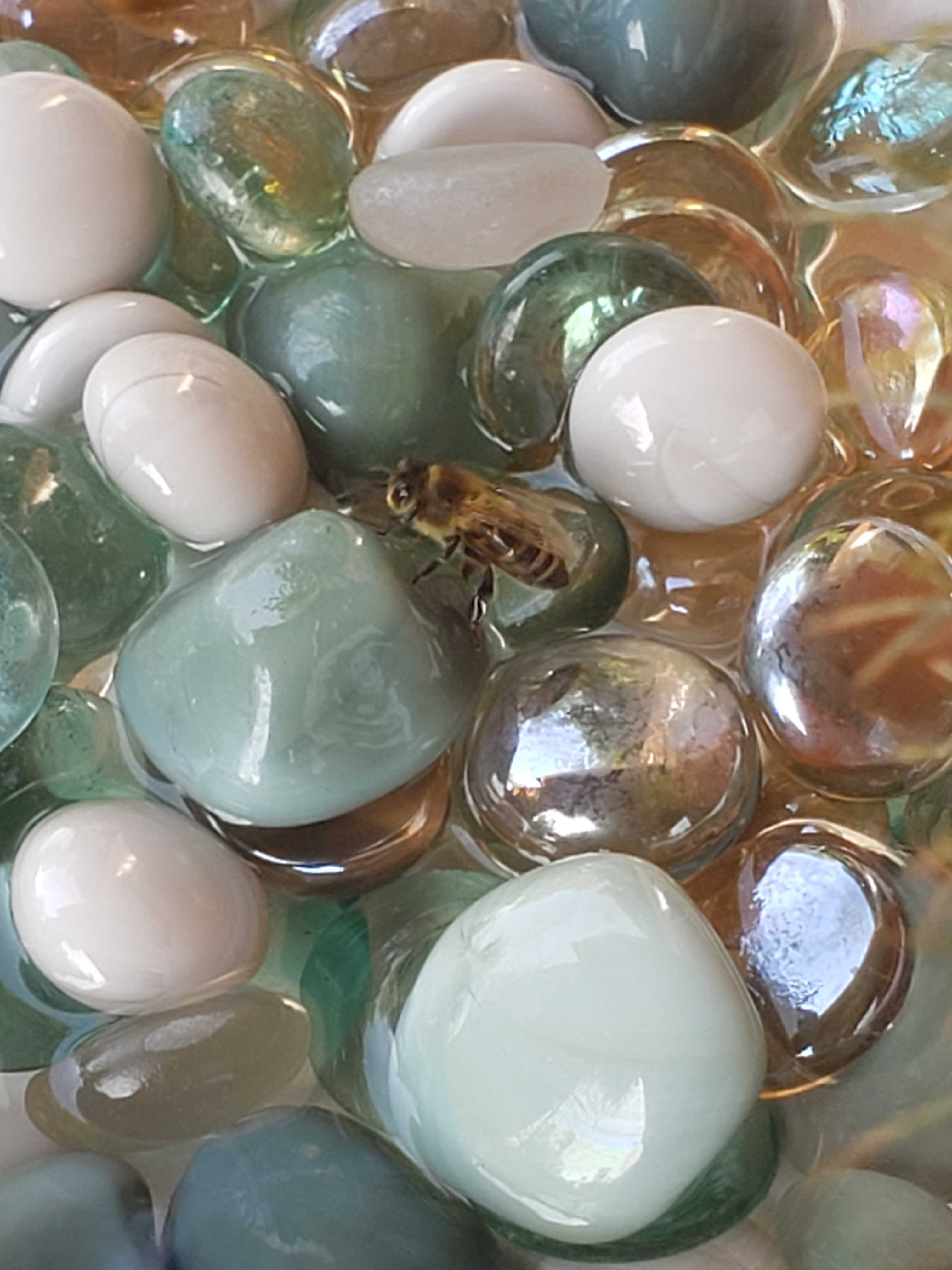
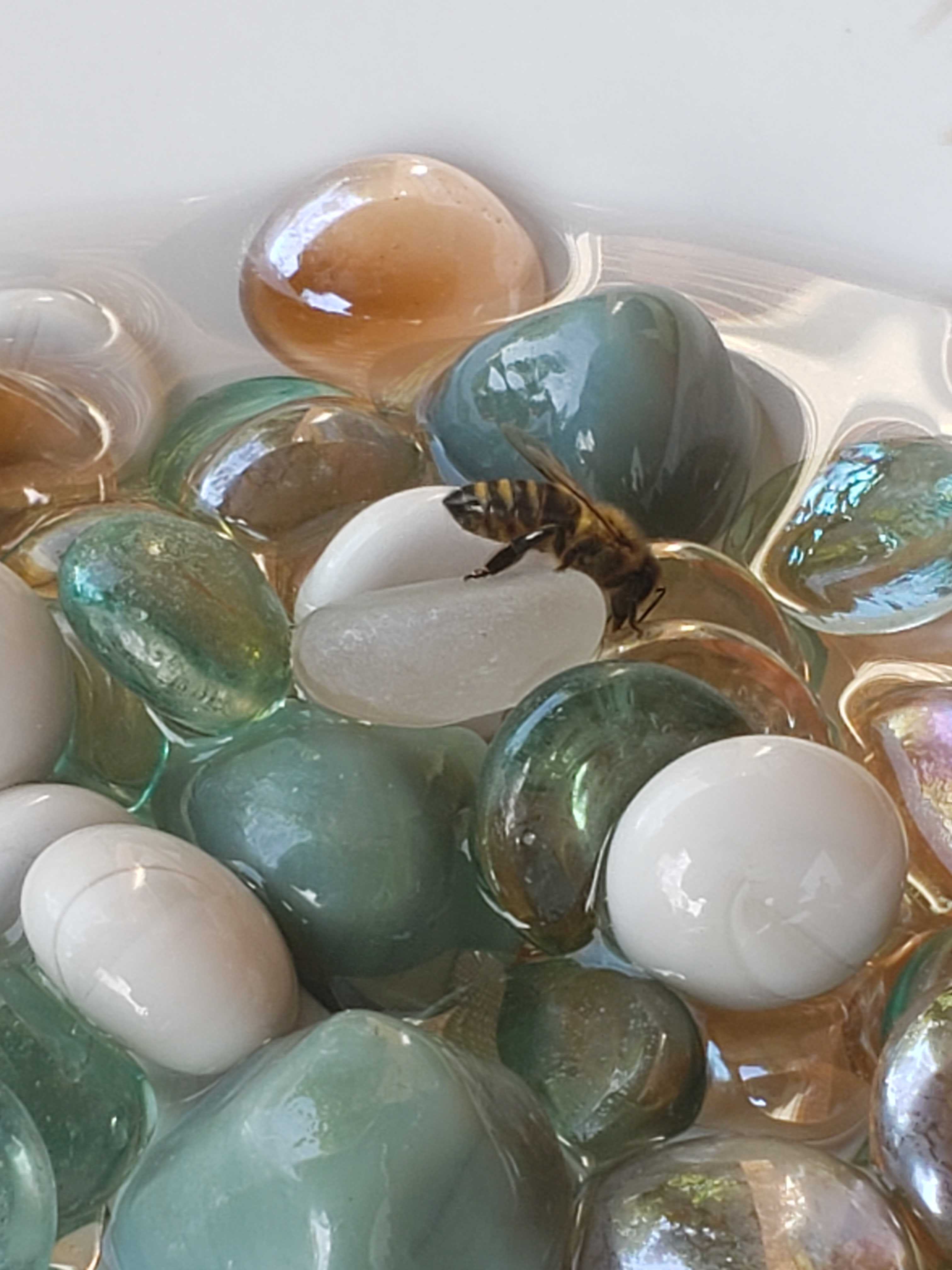
While bees normally hydrate by drinking nectar from flowers, they will also drink water. Social nesting bees (like honeybees and bumble bees) use water to regulate hive temperature, feed their young, and dilute honey stores before consuming. Solitary ground-nesting bees may use it to make mud for their nests.
This article has some more information about how the social nesting bees use water in their hives. It also has some cute and easy DIY bee watering stations you could make to keep the bees cool all summer long, like this pebble-filled dish spotted in a Shutterbee participant’s garden:
Shutterbee goes to the Ecology meeting
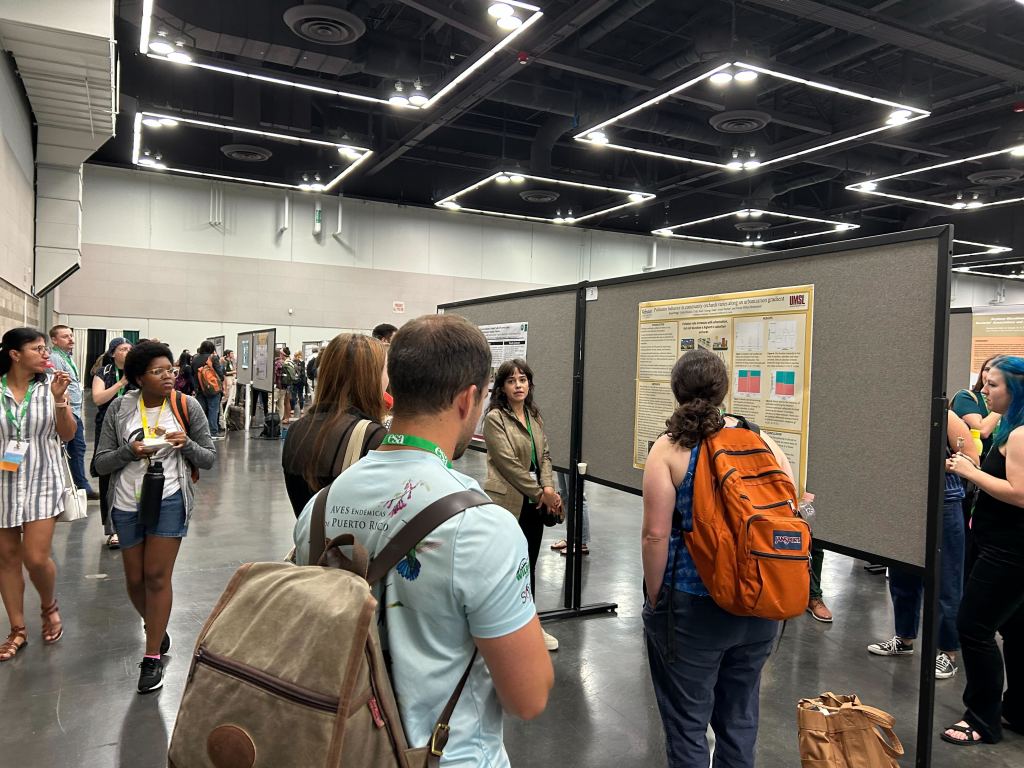
Five Shutterbee students joined Nicole at the 2023 Ecological Society of America Meeting in Portland, Oregon! They rocked their poster presentations and expertly fielded questions from a steady stream of professional scientists, educators, and students. We also had a few chances to check out the pollinators of the northwest and share some delicious meals!




Evelyn Guerrero presented her and Colby Kapp’s work using Shutterbee data to predict which species are found in which gardens and why. They both used Occupancy-Detection Modeling (ODM), which allows us to first address the fact that we have 150+ observers recording data each year. Each of us is a little different in how we approach surveying bees, and these models allow us to account for that. Next, the model tests which factors (for instance, tree cover vs. density of flowering plants) best predicts whether a bee species visited that garden.
Evelyn tested whether stem nesting bees and ground nesting bees were affected by urbanization differently. Spoiler alert, they were! Check out her poster below for more details.
Colby wasn’t able to join us in Portland, but he shared his results on how native vs. non-native bees are affected by urbanization during his senior thesis last spring. Turns out that, generally speaking, non-native species were more affected by urbanization than native species. You can watch the full presentation here.
Kerri Pegg and Michael Hayes presented the results of their work on pollinators in community orchards. Kerri watched hours of videos of pollinators (bees and flies, in this case) foraging for pollen and nectar on fruit trees to test if they behaved differently in the city. When competition for flowers is lower, each flower has more pollen and nectar available, and the pollinators will stay longer to gather it. In the city, pollinator visits were shorter, providing evidence that pollinators behave differently in the suburbs relative to the city. Those differences could influence pollination, if the pollinators are carrying less pollen.
Michael’s work tested this prediction. In collaboration with Alex Hoke and Maria Query, Michael removed pollen from the pollinators, stained the pollen grains with a dye, and counted how many grains were carried by each individual pollinator. In support of what Kerri found, the pollinators in suburban orchards carried more pollen than those from the city! Whether this affects fruit production or quality remains to be seen, but our collaborators at UMSL and Maryville University are figuring that out!
Last but by-no-means least, Sarah Willen-Nelson and Olivia Jarrell explored heat island effects on flowering and insect activity. Last spring, they, along with Kerri Pegg and Emma daSilva, visited 10 community orchards every two-three days. They recorded how many flowers were present on each tree. They then compared flowering timing with insect activity to see if they matched. In 2023, flowering started earlier in the city, but pollinator activity wasn’t affected. Sarah and Olivia predicted that this would result in a mismatch, where the plants bloomed before the pollinators became active in the city. However, they didn’t see that. The match between plants and pollinators was really variable but didn’t respond to urban-ness. We suspect that this variation is due to having high pollinator diversity – each species responding slightly differently to weather – and that biodiversity buffers the trees from a potential mismatch with their pollinators.
Monarch Madness
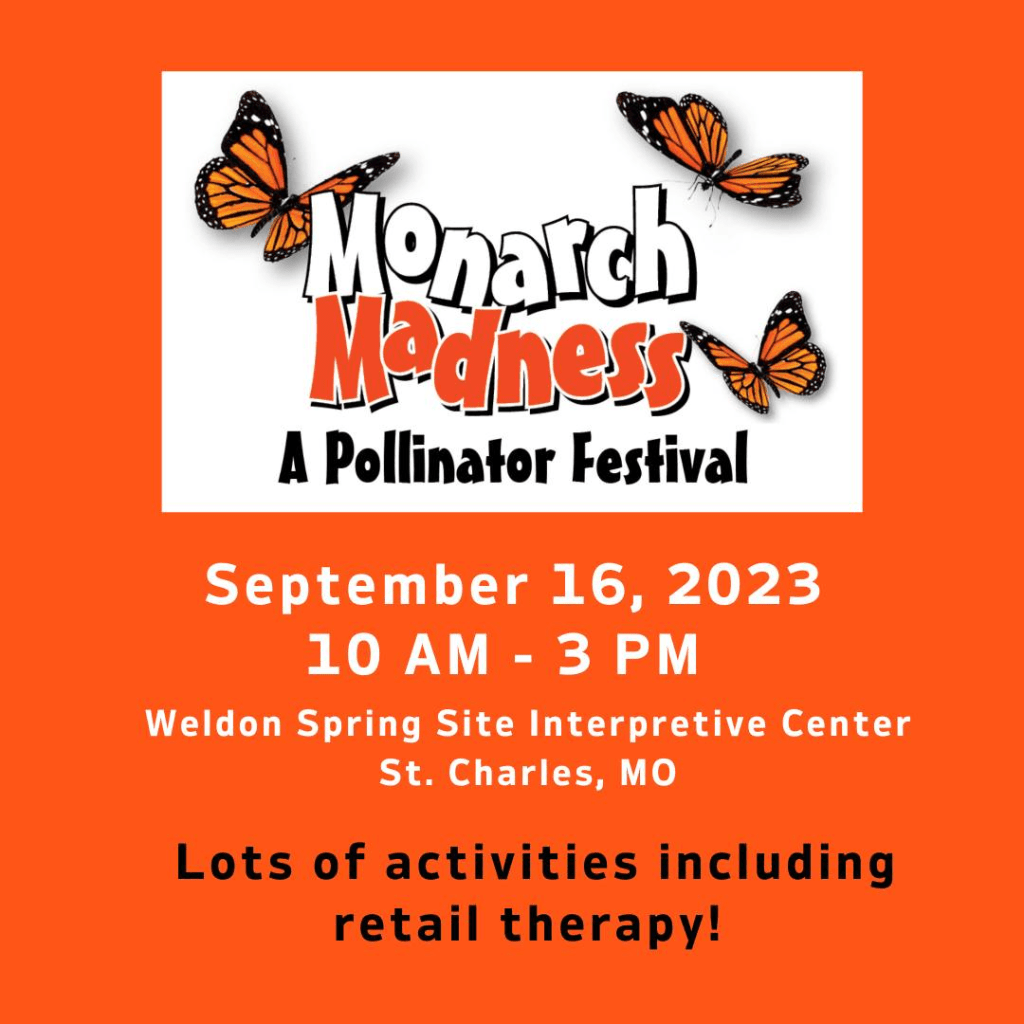
Interested in celebrating non-bee pollinators next month? Monarch Madness, an event hosted by the Missouri Department of Conservation and many other amazing partners, is taking place September 16 at the Weldon Spring Site Interpretive Center. It is free to the public and will run from 10:00 AM – 3:00 PM! There will be vendors (some with native plants for sale!), food trucks, and other fun educational opportunities. Click here for more information on the event!
 SHUTTERBEE