
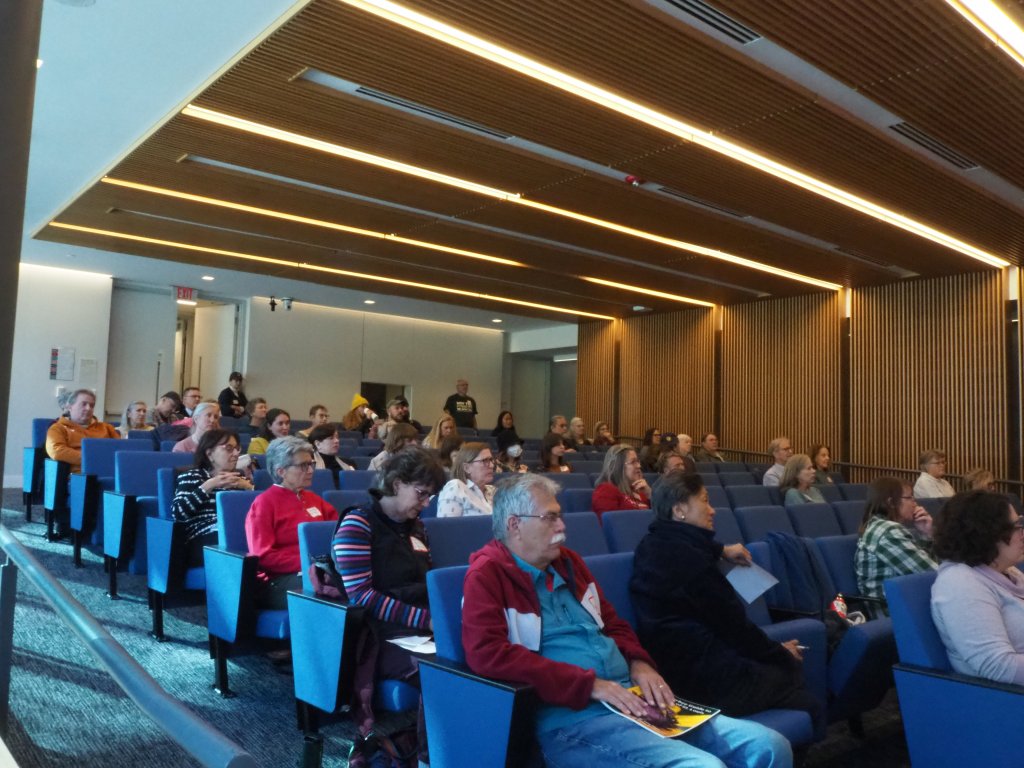
On November 11th, we gathered at Webster University for the second annual Shutterbee Symposium. We had an excellent time socializing and listening to talks put together by Shutterbee participants and undergraduate researchers at Webster. This newsletter will be a recap of the talks given. For those unable to join us, a recording of the talks is available on the Login page of this website (scroll all the way to the bottom).
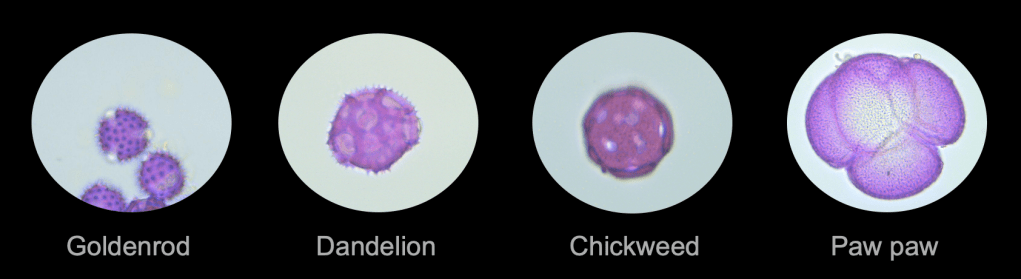
Talk #1: Unlocking the mystery of pollen identification
Michael Hayes, an undergrad at Webster, detailed his efforts to assess what plants bees collected pollen from in an orchard. Plants have different shapes and sizes of pollen, so by looking at the pollen under a microscope, we can determine which flowers bees are visiting. This has important implications for fruit production in these orchards, because there will be higher pollination rates if bees visit the same species as opposed to switching plants.
Talk #2 Milkweed for native bees
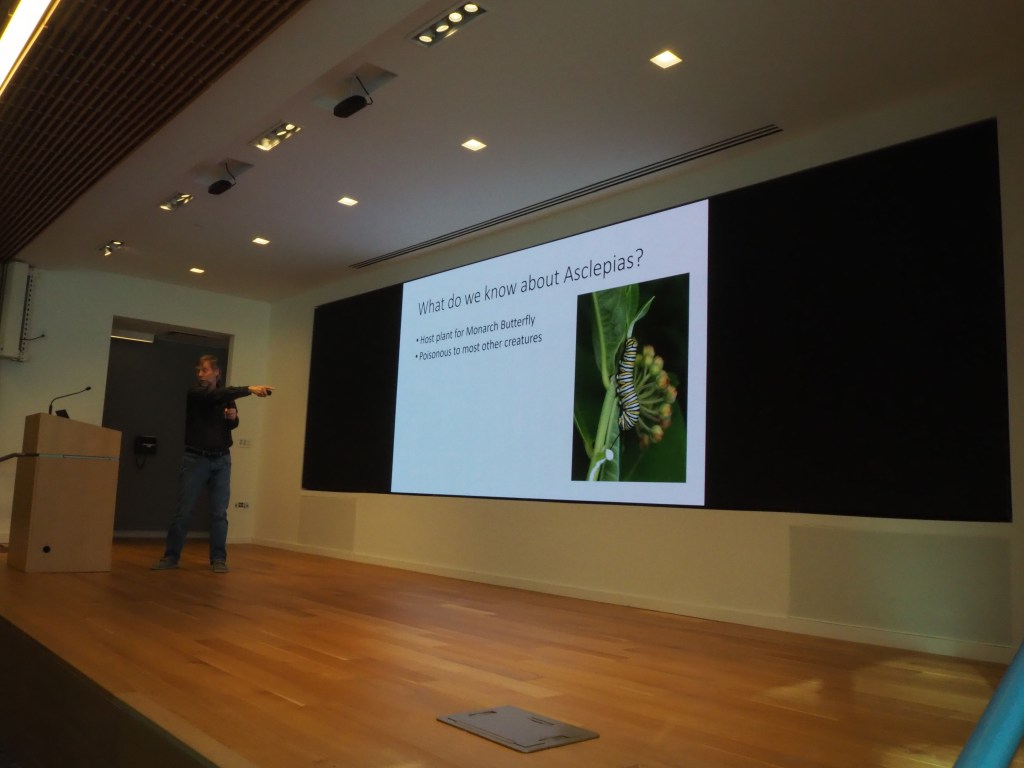
Don LeBaige gave a talk about the different types of milkweed that are native to the area. Although we usually think of milkweed as an important plant just for monarch butterflies, many bees visit it as well. He described the unique pollen structure that milkweed have called pollinia (which are essentially packets of pollen). If the bees aren’t strong enough to pull out the pollinia, they can get stuck to the flowers! Lastly, Don warned against planting tropical milkweed because it causes monarchs to lay eggs that will not have time to develop before winter sets in.

Talk #3 Lesser Prairie Chicken Conservation
Chloe Armistead, an undergrad at Webster, presented on the lesser prairie chicken including its range, mating behavior, and importance as an indicator species or habitat quality for prairie ecosystems. This species is vulnerable to extinction primarily due to habitat loss for agriculture. Additionally, the males will not perform their mating dances if there are tall structures such as wind turbines which shows the importance of measuring the impact on local species when installing wind farms and other green energy projects.
Talk #4 Finding Colletes aestivalis
Chris Kirmaier presented on how the worldwide bee community led to the discovery of the first known record of the Heuchera specialists bee Colletes aestivalis to be found in her yard. Chris posted the photos on iNaturalist while practicing for Shutterbee in 2021. The bee was presumptively identified by Singapore-based researcher John Ascher. Then in 2023, local bee expert Mike Arduser collected the bee and confirmed the identification. Chris described the behavior of the bee, such as the males who hover above the flowers in an interesting position (see photo below).

Talk #5 On their best bee-havior: Pollen gathering in urban orchards
Kerri Pegg, a Webster undergrad, presented the different actions that bees do to remove pollen and nectar from plants including scraping, tapping, buzzing and rubbing. Kerri highlighted how not all bees are capable of all actions. Further, the action that bee uses may influence the quality of pollination services individual species provide.
Talk #6 Creating pollinator habitat with an MSD rainscaping grant
Eileen Graessle described her process of getting money from MSD to install a prairie at her house. She was awarded $3,000 which helped pay for raw materials as well as a contractor. Eileen first killed the grass and prepped the site and then seeded the area. This summer was the first year of growth and she’s been working to keep the weeds at bay and promote plant growth.
Click here to learn more about the eligibility requirements and the application process.
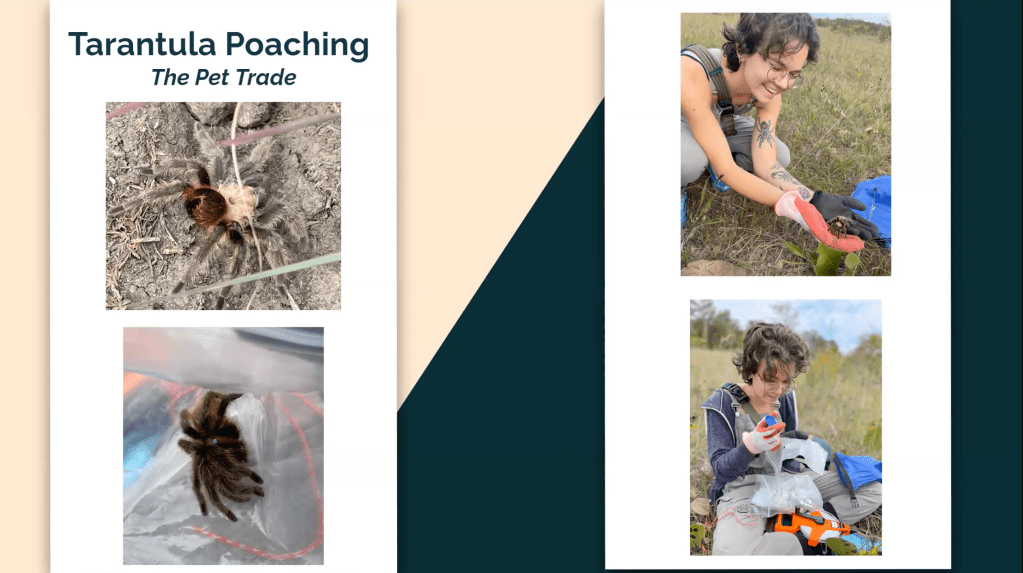
Talk #7 Missouri’s Native Tarantulas!
Nataleigh Scheller-Houska is an undergrad at Webster. She presented on Missouri’s native tarantula, Aphonopelma hentzi. This species is relatively docile, slow moving, and have venom that isn’t life threatening. However, these critters can still defend themselves! They have urticating hairs that are sharp as shards of glass that they can flick off when threatened. She spoke about how keeping tarantula as pets can increase conservation effort by building awareness but also there are bad actors that poach tarantulas from the wild.
Talk #8 If you’re not looking for it, you won’t find it: the case of the passionflower bee
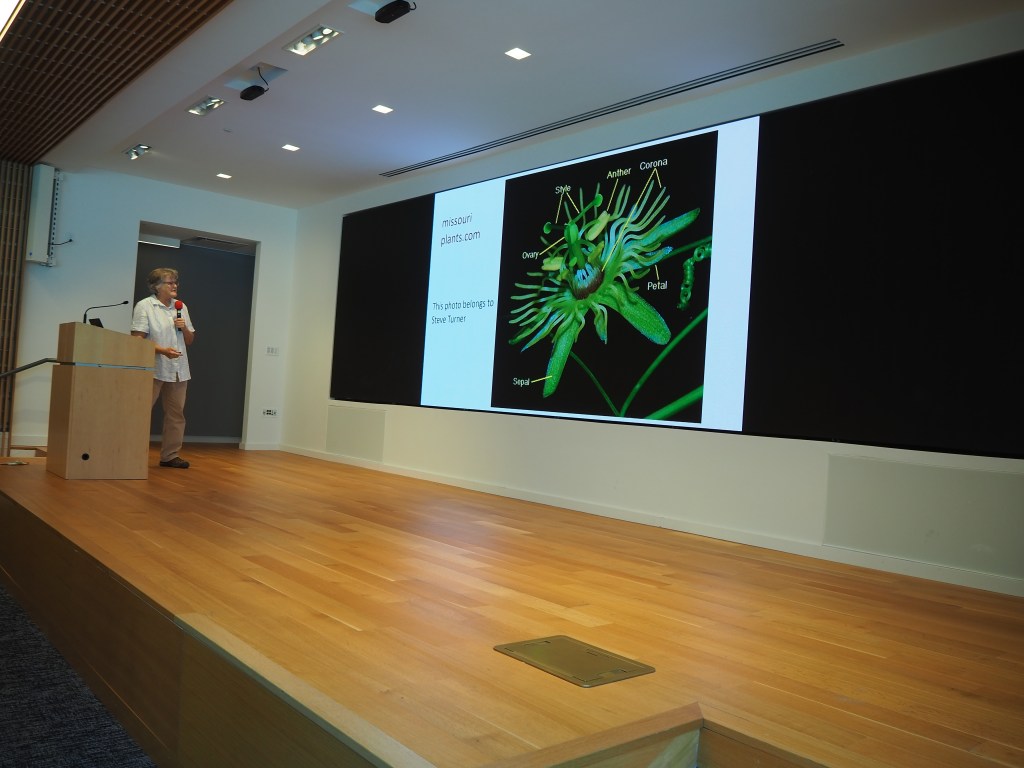
Kathy Bildner presented on the Passiflora lutea specialist bee, Protandrena passiflorae. These bees are present in her yard every summer despite few other records in the region. The bees are frequently seen mating on the flowers—the male will be behind the female while the female continues to collect pollen. The mating behavior may actually make them better pollinators by lining up the bee body with the stigmas of the plant. Kathy encouraged other to plant Passiflora lutea so that we may have that chance to find this fascinating bee in additional locations.

Talk #9 Rise of artificial intelligence in ecology
Jason Pho, an undergrad at Webster, presented a few of the current uses of artificial intelligence in ecology. One that we are all probably familiar with is the “computer vision” on iNaturalist in which species are suggested based on the appearance (well, really the color arrangement of pixels) of the photo. Jason highlighted other uses for AI including using it to parse the sounds that different species make to assess the health of a habitat based on sound recordings.
You can read about iNaturalist’s new computer vision model here.
Talk #10 Bees on drugs: how plants give pollinators a buzz
Becky Hansis-O’Neill is a PhD candidate at UMSL and a Shutterbee participant. She presented on how plants may create drug-like compounds, possibly to attract pollinators to their plants. Bees have been shown to respond to alcohol, stimulants, and nicotine. However, they do not have the receptors to process cannabis, and it is unknown in they respond to opiates and psychedelics. Becky presented results from her own research showing that when they give a bee the opportunity to drink nectar laced with caffeine in a lab setting, some bees visit the flower more than expected by chance, some less, and some are unaffected. This suggests that bees are making different decisions when foraging, which reflects the long evolutionary history that led to plants producing drugs and bees responding to them.

Talk #11 Bee decision fatigue means some plants go unpollinated
Sarah Willen-Nelson, an undergrad at Webster, presented on phenology––the timing of biological processes––and its consequences for pollination. Flowers need pollinators to pollinate them, and pollinators need flowers for food. If the bees emerge when flowers are not in bloom or the flowers bloom when the bees are not out, this has negative ramifications. In the St. Louis region, the timing of spring hasn’t changed much over the last 60 years, but flowers in fall are flowering for much longer, resulting in greater co-flowering. This has implication for the plants as bees could be visiting a greater diversity of flowering plants at one time, which as Michael pointed out, isn’t good for plant reproduction.
Talk #12 Small talk doesn’t have to be small, or why you should talk about the bees
Maddie Earnest implored everyone to use small talk opportunities to communicate science. For example, if someone asks you what is new with you, instead of saying something basic such as “nothing much” you can talk directly about an experience such as “I spent the summer doing bee surveys in my yard. I found so many bees!” This turns a meaningless formality into an actual conversation.
Maddie’s tips include:
- Don’t be a know it all because you don’t know it all. Talk about how much you have learned and what you didn’t know before to show that they can learn too
- Make it relatable–”Before I started this, I could not have told you the difference between a wasp and a bee.”
- Tell them how many species you have found in your yard to show your gardening practices are making a difference. This also provides an action that others can do.




 SHUTTERBEE