
Results update, pollinators of winter veggies, AI in the garden, beekeeping traditions, and pollinator podcasts
Sampurna and Haley successfully defend their theses!
Join us in congratulating Sampurna Lamichhane and Haley Gojohn on the completion of their excellent senior theses! Sampurna and Haley worked incredibly hard to better understand bee diversity in human dominated landscapes. We won’t steal all their thunder (you’ll need to watch their talks to get the full scoop!), but the take homes are really interesting.
St. Louis, like many urbanized areas, has surprisingly high bee diversity. Past research by other Shutterbee students demonstrated that local bee diversity (known as alpha diversity) was higher for gardens in the city relative to gardens in the suburbs. However, there is also some evidence in the literature that buildings, roads, and other man-made structures make movement among garden patches challenging for pollinators. While that may seem like a bad thing at first, it may actually allow for rare species or those that are poorer competitors to persist in isolated garden patches. Haley and Sampurna each tested a different part of that prediction.
Haley used two approaches to test if bees are less mobile in the city. With the help of her lab-mates, she marked 152 bees at two locations – one in the city and one in the suburbs. Forty eight hours later, they “recaptured” bees using our Shutterbee photo survey protocol. Interestingly, only one bee moved! While that is interesting in and of itself, it didn’t allow Haley to test her hypothesis.
Rather than be discouraged, Haley returned to the literature to see if we could “mine” the data from previous research to test her hypothesis. Using data from two papers, she documented that bee movement was actually higher in the city – possibly because bees have to travel farther distances to access sufficient floral resources (though that has yet to be tested directly).

Sampurna tested for changing in species turnover more directly using your Shutterbee data. He separated Shutterbee gardens into neighborhoods, and tested whether gardens in the city had more unique species. If so, then we would expect to see greater species turnover from one garden to the next (known as beta diversity). Interestingly, he found no evidence of this, which means that local patch conditions are more important than the neighborhood – further evidence that what you do in your individual gardens matters most for supporting bees!
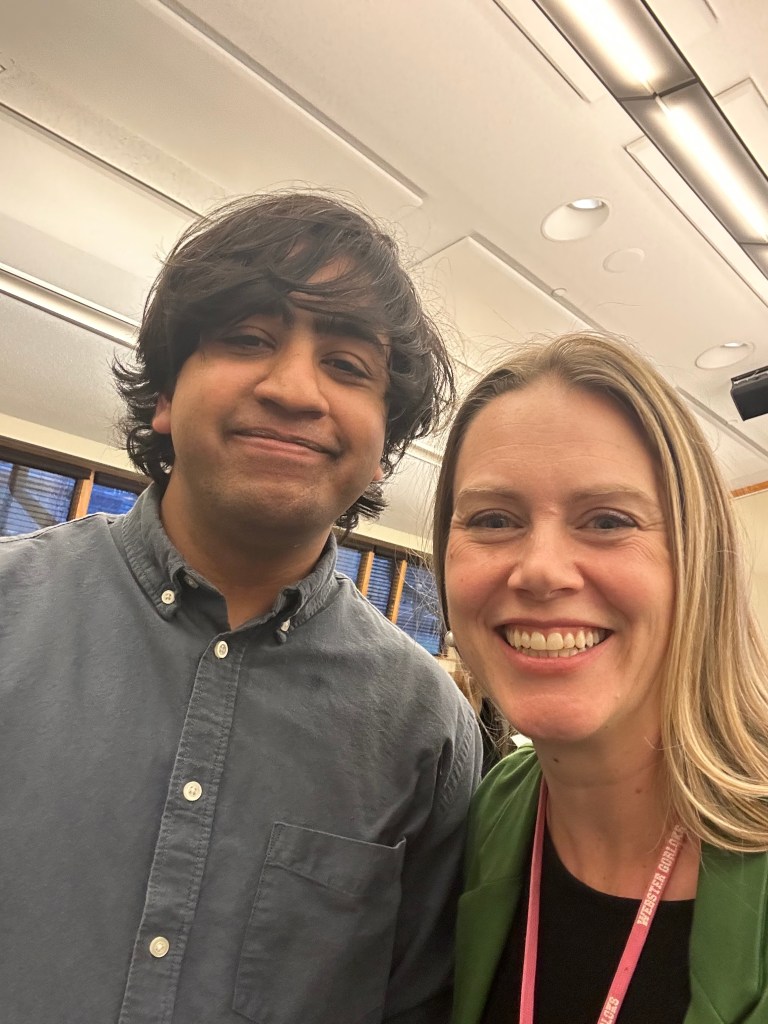

To learn more about their work, watch their full senior thesis presentations on the “Login” page.
Winter veggies
Now that the weather is (sort of?) cooling, the bees are done for the year. Although many fall and winter fruits and vegetables ripen once many of the bees are done, they still depend on the hard work of pollinators from earlier in the year! So, while we might hear less buzzing outside, we can be mindful of and grateful for the critters and processes that helped make our favorite cold-weather dishes possible.
Here are some traditional fall foods and their pollinators in the Americas:
Pumpkins
For many of us, one of the first foods that come to mind when autumn rolls around is the hearty pumpkin. Pumpkins, along with other winter squash like butternut, spaghetti and acorn, are common fall flavors in pies, soups, breads, and even in your latte. Peponapis, or squash bees, are squash specialists and excellent pollinators of pumpkins and related plans! These charming critters, especially the males, can be found in squash blooms, pictured below:

Cranberries
Juiced, sauced, dried, or raw, cranberries are delicious, bright, and tangy fruit. They can be picked between October and December. Interestingly, commercial farms often flood their fields for easy harvesting because cranberries float! Long before the water, though, bumblebees, leafcutter bees, sweat bees, mining bees, and honeybees all visit cranberry blossoms.
Potatoes
While potato tubers themselves do not require pollination to get from farm to table, the potato plant is pollinated by insects. This South American native relies upon bigger bees, especially those in the family Apidae because they can buzz-pollinate, or sonicate, the flowers. Check out this slow-motion footage of a bumble bee sonicating from the Smithsonian (time 45 seconds):
Sweet potato
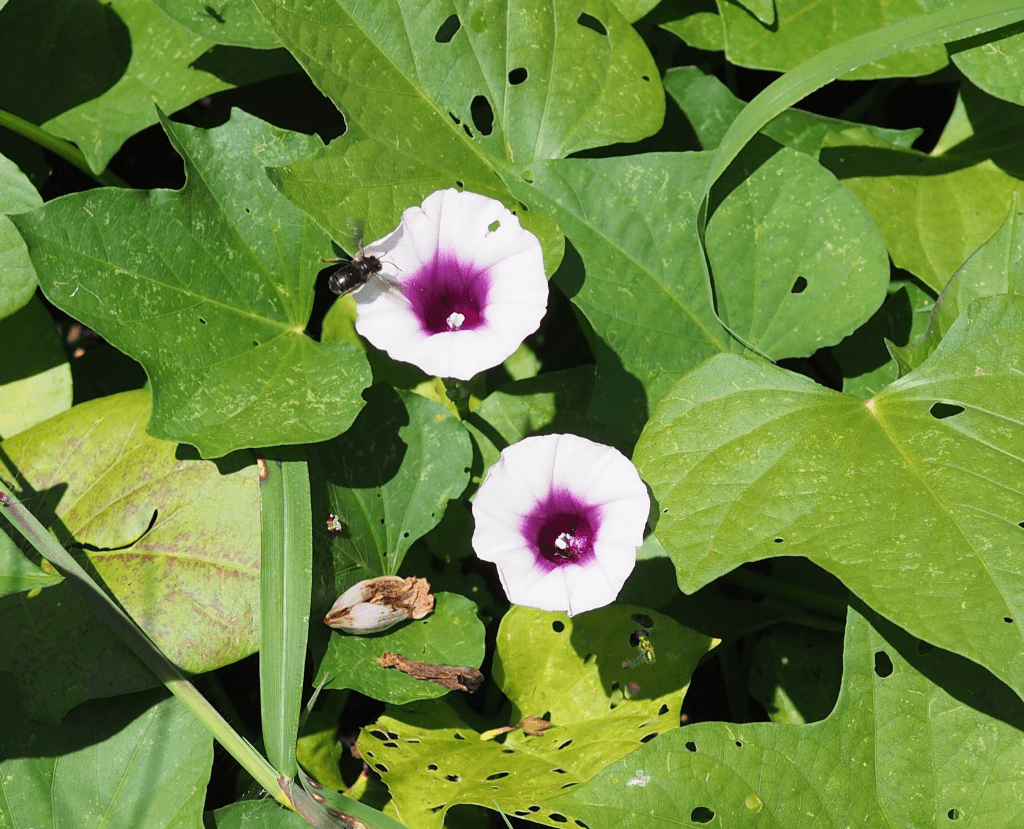
An interesting fact about sweet potatoes is that they are not actually potatoes! While they hail from South America just as “real” potatoes do, they are in the morning glory family (as oppose to nightshade family). Many different native bees visit this fall crop, such as this two-spotted longhorn bee:
Corn
Despite being wind-pollinated, no fall food list could be complete without corn. Corn is an incredibly versatile plant with a long and rich history in the Americas. Cornbread, grits, masa polenta and hominy are traditional uses of this staple plant. While corn does not rely on bees, bees may still be found in corn fields foraging for the floral resources they provide.
See like a bee
Ever wondered what your garden might look like to a bee? Well, wonder no more! Artist Alexandra Daisy Ginsburg created Pollinator Pathmaker to answer this question by simulating UV flower colors that many pollinators can detect and rely upon when foraging. In this experience, you can create an AI-generated garden space (including native plants and planting recommendations)! with factors such as location, soil pH, and light level.

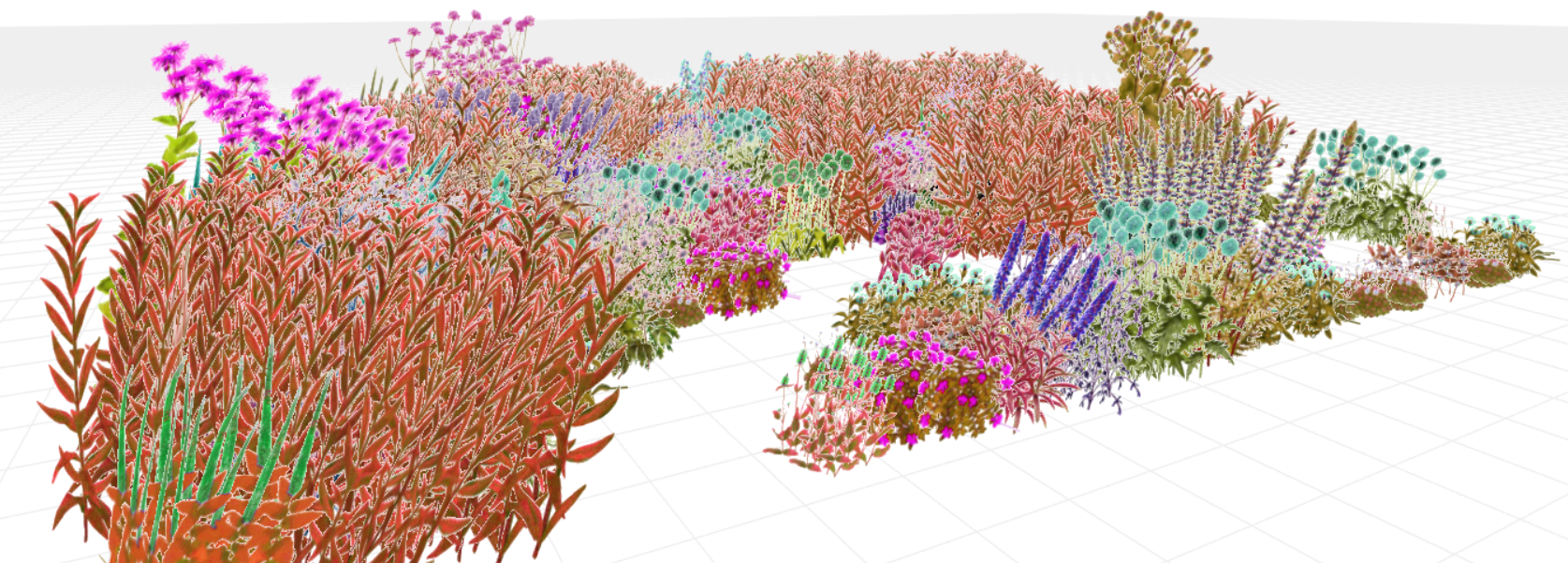
Unfortunately, the project’s scope is limited to Europe, but it is still a fun activity to see how bees and other pollinators might navigate greenspaces across the pond!
Click here to explore: Pollinator Pathmaker
Telling the Bees
Have you ever heard of the tradition known as “telling the bees”? Dating back centuries, this custom is rooted in various cultures and has notable significance. “Telling the bees” refers to the practice of informing honeybee hives about notable events in a beekeeper’s life and household such as births, deaths, and marriages. This ritual stems from the belief that bees are not only highly intelligent creatures but also have a spiritual connection with their keepers.
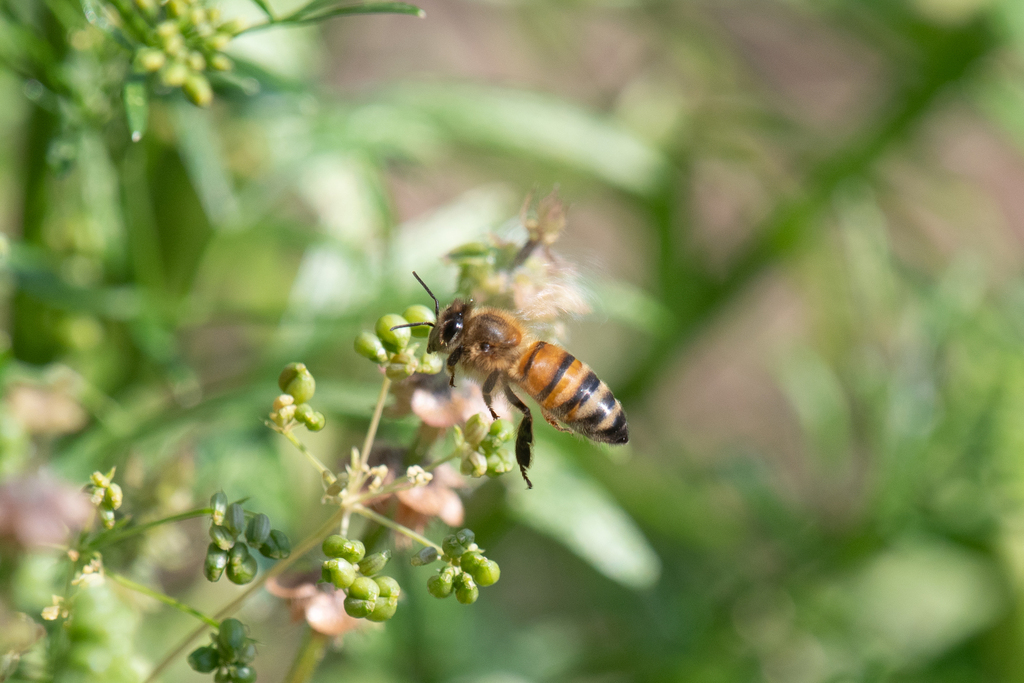
There are many ways to commune with the bees, such as speaking directly, whispering, or leaving written notes after gently knocking on the hive. The underlying idea is that bees, given their purposed intelligence, benefit from being notified, thereby maintaining their well-being and continued productivity. Failure to inform the bees may lead to hive abandonment, decreased honey production, or even potential harm to the beekeeper or household.
While this practice might sound quaint to some, this tradition reflects the deep connection between humans and other parts of nature all around us — specifically the vital role bees have played in our agriculture throughout history. To learn more about this practice, check out this podcast episode.
Listening List for Listless Locomotion
If you’re traveling at all over the next few weeks, you may need some good listening material to pass the time. Here’s some bee related podcast episodes to make that layover or time along I-44 a bit more interesting. All these links go to the podcast’s website, but the episodes can be found on Apple Podcasts, Spotify, or wherever you get your podcasts
- On Beeing from 99% Invisible
- Telling the Bees from This is Love
- The Business of Bees from PolliNation
- Multiple episodes about pollinators from In Defense Of Plants
- Nature, By Design? taking the Neo-Eoscenic Route (Part 1/3) from Future Ecologies
- Yardwork: Lawn and Order from Outside/In
- Podcasts for Kids
- The Buzz on Bees Pt. 1 from Brains On Universe
- Why Do We Need Bugs? from Brains on Universe
- What is a Bee’s Favorite Flower? from Moment of Um
- How do Butterflies and Bees Flap their Wings? from Moment of Um
 SHUTTERBEE