Honeybee thievery, tacking witch hazel, Partners for Native Landscaping series, bumblebee superfood, and orchid bee perfumes
Honeybee Thievery

Honey bees are thieves! Well some are – let’s not over-generalize here. Recently, a group of researchers found that honeybees display a surprising behavior––stealing pollen from other bees! This phenomenon, previously only recorded in North America, has now been documented in Italy by biologists Tiziano Londei and Giuliana Marzi. Their observations unveil honeybees shamelessly snatching pollen from the backs of bumblebees, marking one of the most extensive records of “bee-on-bee larceny” to date.
Footage captured by the team reveal honeybees targeting red-tailed bumblebees on woolly thistle flowers, with the thieves having a preference for males as targets. Notably, the males bumblebees did not seem to exhibit much aggression towards the honeybees, making them choice victims.
In fact, this might be beneficial for both the male bumble bees and the honey bees. The honey bees get easy access to pollen, and the male bees get groomed. Unlike females, males don’t collect pollen, so they don’t need it and the pollen may slow them down while flying. For the females, on the other hand, it would be an issue – all their hard work intentionally collecting pollen would be negated by thieves.

Repeated investigations over a three-year period suggest a recurring pattern which may be influenced by pollen availability and competition from other bees. Moreover, the researchers speculate that pollen theft may be a response to honeybees having a relatively difficult time collecting pollen from certain flowers, such as the woolly thistle.
So how common a career title is “pollen thief” in the world of bees? Its presence in both Italy and North America suggests it may be a global occurrence, but more research must be done. In all, this is an incredible reminder of how much we have left to discover about even the most ubiquitous of species!
Watch the thievery here:
Help track the timing of witch hazel bloom
Forest ReLeaf needs your help to track when witch hazel blooms around the region. If you have witch hazel in your yard or see one around, they want to know about it. Recordings can be submitted to this very quick form. You can learn more about the project here, and please share it with others!
Partners in Native Landscaping Series

The seminar series Partners in Native Landscaping is starting up soon and goes from February 20th to March 20th. This annual series of online talks is a great way to learn about different facets of native gardening including how to support bees, trees, and birds.
Bumblebee Superfood
It’s an unfortunate fact of life: everyone gets sick. From the largest of blue whales to the most minuscule of microbes, no species is completely safe from illness. Luckily, due to the advances of modern medicine, many of us humans can run to the pharmacy or book a doctor’s appointment to help cure what ails us. Bees, however, are not so privileged. This is not to say that these pollinators are totally lacking in the world of medicine, though!
A recent breakthrough in pollinator ecology is the discovery that certain flowers possess potent disease-fighting properties for bees. Specifically, plants in the sunflower family (Asteraceae) are particularly adept at combating a prolific parasite of bumblebees.

Crithidia bombi, a relative of the pathogens that cause Chagas Disease and sleeping sickness in humans, is a notorious intestinal invader of bumblebees. This protozoan causes declines in an infected individual’s pollen-collecting efficacy, which can hamper the overall success of a colony.
How exactly do the sunflowers fight off these microbes? Researchers determined that the answer lies in the spiky shape of Asteraceae pollen. Experiments uncovered that bees fed with isolated pollen shells experience significantly lower infection rates – a whopping 81-94% reduction. Interestingly, sunflower pollen isn’t the most nutritious pollen out there. Despite its low protein content, though, sunflower pollen is a potent shield against gut pathogens, proving that sometimes, it’s not just about what’s on the menu, but how it’s served!

Furthermore, sunflower abundance correlates with increased queen bee production. By placing commercial bee colonies in sunflower-rich environments, scientists observed a remarkable uptick in queen bee numbers, which applies well to both conservation and agricultural endeavors. While there’s still much to learn about the intricacies of sunflower pollen and its impact on pollinator health, these initial findings offer a new path of research in the quest to safeguard our beloved bees––and perhaps lend to the age-old saying: “food is medicine.”
Orchid Bee Perfumes
While orchid bees are well known for their vibrant colors and close associations with––you guessed it!––orchids, their intrigue does not end there. Incredibly, orchid bee males have the notable ability to create perfumes. Why? To smell good for the ladies, of course!
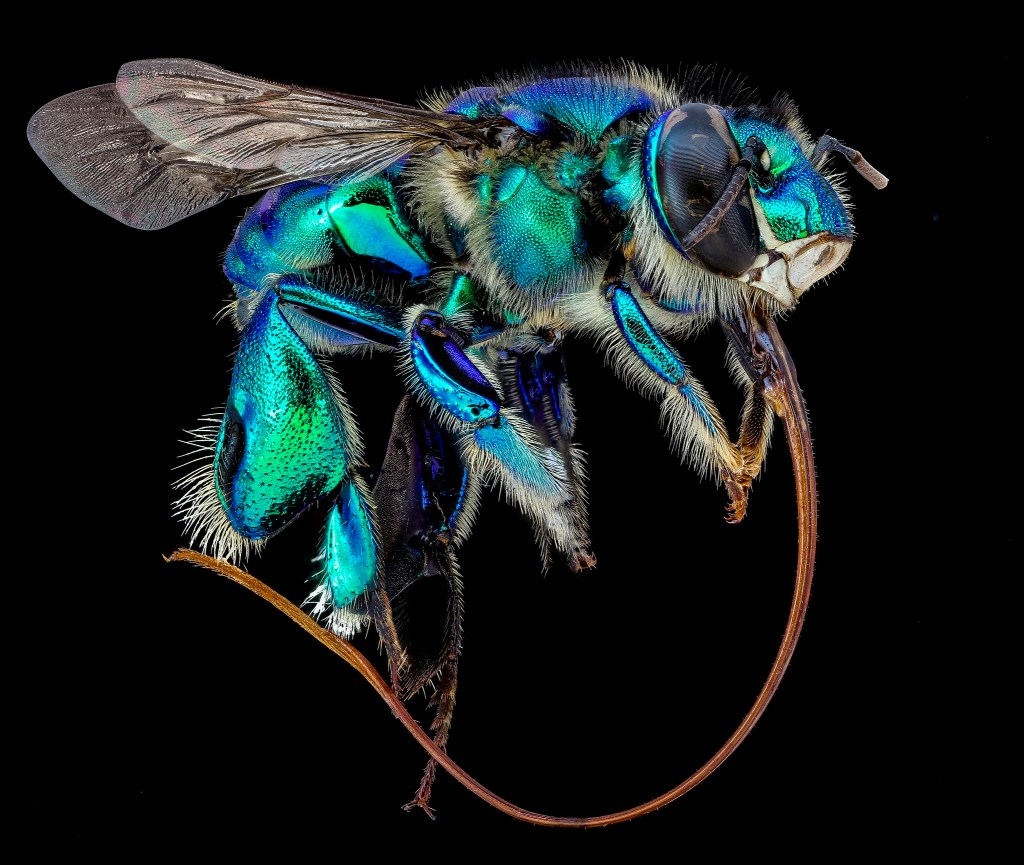
The process begins with the collection of aromatic compounds from various natural sources such as flowers, fungi, and tree bark. Using specialized hairs on their bodies, orchid bee males meticulously gather these fragrant materials, blending them into a unique oily concoction.
Once collected, these aromatic compounds are stored in specialized structures called tibial pouches on their hind legs. Here, the bees mix and refine their perfume, achieving the perfect balance of scents to attract potential mates. Male orchid bees do not have traditional pheromone glands like most bees, so they cultivate this smelly skill as a replacement.

Merely smelling good isn’t enough, however. These aromatic artisans employ intricate aerial displays to showcase their alluring fragrances to make themselves known. The choosy females will then pick only the best perfumers to mate with. The criteria for what makes a male’s cologne “good” is unique to each species, and research is ongoing to elucidate the various aspects of this iconic behavior.
Watch a male collect from an orchid here:
 SHUTTERBEE