
Data collection for Shutterbee ended in 2023, but it lives on through the continued efforts of our participants on iNaturalist and the research team’s number crunching behind the scenes. We’ve been doing presentations, publishing papers, and witnessing our community advocate for pollinators and native gardening throughout St. Louis! We have hit a few important milestones, and we wanted to share a few of the highlights from recent months.
We published a paper!
There’s a lot of participatory (i.e. citizen) science programs that are mostly about outreach—the goal is to engage the public in science, but the data the participants collect are less likely to be used to answer scientific questions. When we were dreaming up Shutterbee, we were adamant that we wanted the data you all spent so much time collecting to be usable to study ecological questions. This is why we had training, individualized feedback, and a set protocol. However, we still needed to investigate 1) How good photography was at surveying the bee community and 2) If individual participants and participants as a whole had biases when photographing the bee community.
In 2021 and 2022, Nina caught and released bees with a net at 44 locations. Our undergraduate researchers conducted a Shutterbee photo survey protocol at the same time, and we compared the two. At an additional 106 locations, the undergraduates did a Shutterbee survey, and we compared their results to the participant’s most recent survey at the same location.
Some researchers questions the role of photo surveys (vs. destructive sampling) in sampling bee communities and behaviors. However, we found that netting and photography produced remarkably similar results! There were no taxa (i.e., genus, species, tribe depending on the group) that differed significantly between netting and photography.
There was also a high degree of similarity between Shutterbee participants and undergraduate surveys. While participants photographed fewer small bees (Lasioglossum, Ceratina, Hylaeus) than the undergrads, the results were otherwise very similar for most bee taxa. Individual participants varied in how closely their surveys matched the undergraduate’s. Occasionally, the undergraduates photographed significantly more bee taxa than a participant, but there were also instances when a participants photographed more than the undergrads!
We were incredibly impressed by your ability to photograph these small, flying insects. We even have some evidence that “practice makes progress” because the people who photographed more bees (from doing more surveys) more closely matched the undergraduates. Your skill, combined with the lack of biases in photography as compared to netting, allows us to use these data to answer ecological questions. We have the data to prove it!

To learn more, check out the PDF of the paper available here.
What are we up to?
Nina has been working at the Missouri Department of Conservation since January. She is the Natural Heritage Database Manager, dealing with records of species of conservation concern across the state. The skills she learned manipulating Shutterbee data come in handy all the time!
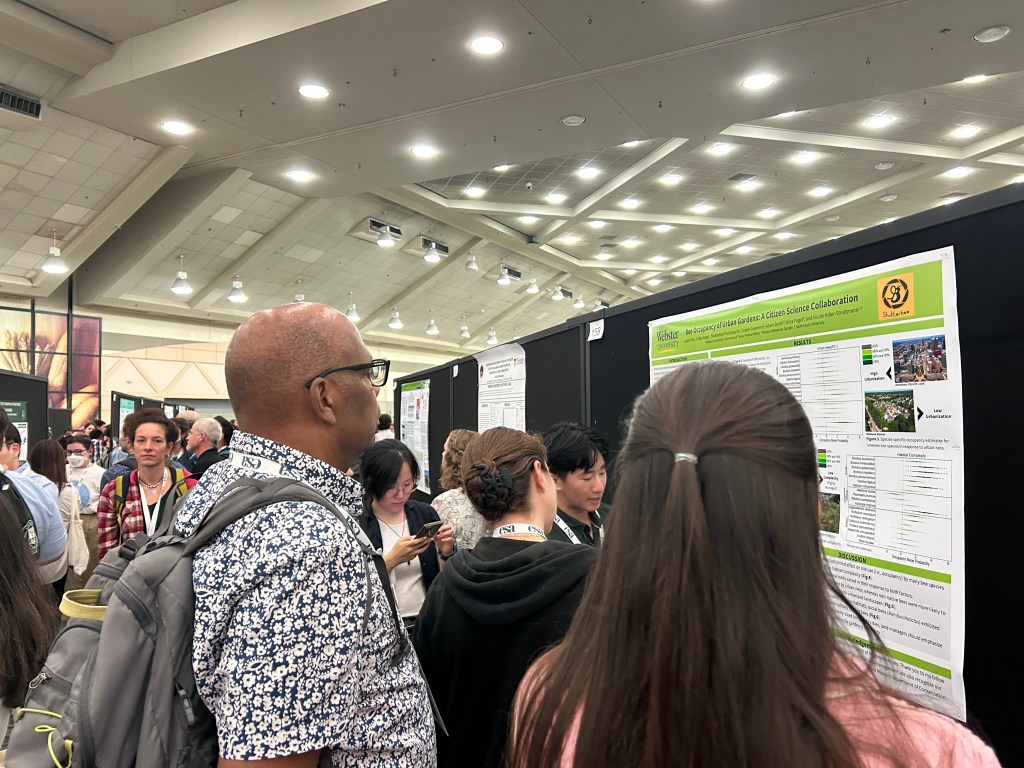
Nicole and her students have been continuing to sing the praises of our Shutterbee participants to anyone that will listen and sharing the results from the research at conferences around the country. We have three more manuscripts in prep for publication, including one by Jason Pho on the importance of habitat complexity for bees, one by Cheyenne Davis on plant-pollinator networks, and one by Erin Tate at the Saint Louis Zoo on changes in human behaviors following participation in Shutterbee.

Quick Hits
- You all continue to post on iNaturalist! Since 2024, 2,832 bees have been posted by 80 people. We love that you are still contributing to the scientific community.
- Ned Siegel was an internet celebrity in 2023 when he found a cuckoo bumblebee (Bombus citrinus) in his yard during a Shutterbee survey. This was the first time the bee had been recorded in the area since the civil war. He found it AGAIN in 2024 and 2025! Way to go, Ned!
- The webcomic XKCD made a map of the most frequent animal and plant on iNaturalist in each state. For Missouri, the most common animal recorded is the brown belted bumblebee (Bombus griseocollis). Roughly 6,000 of the 8,700 observations in Missouri came from Shutterbee participants! In fact, four out of 5 of the top species in the state were bees, and Shutterbee participants photographed at least half in each instance.
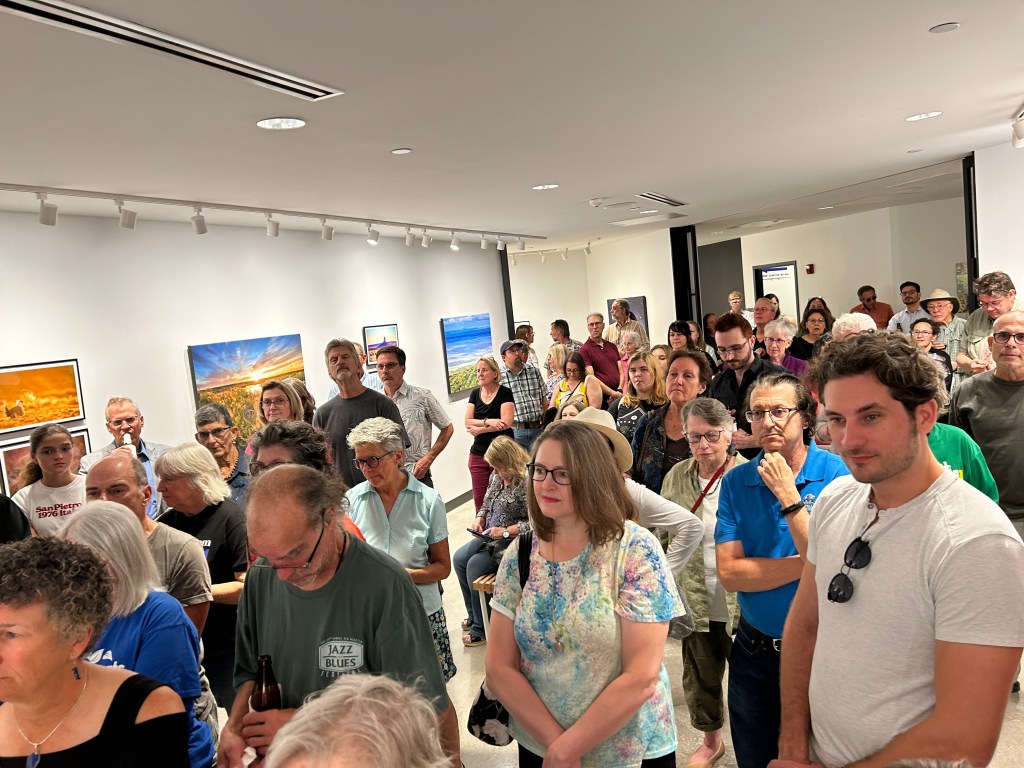
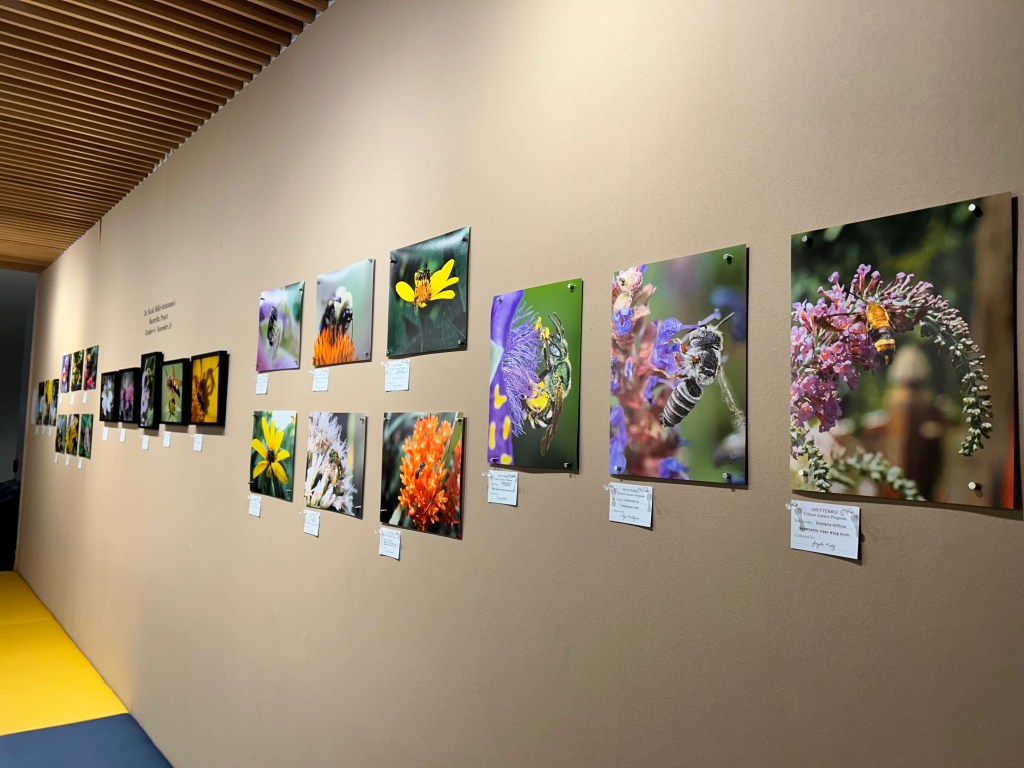
- We celebrated the photographic prowess of Shutterbee participants during an exhibit that ran in fall of 2024. A small subset of your amazing photographs were featured at the Kooyumjian gallery alongside the work of renowned nature photographer, Noppadol Paothong.
 SHUTTERBEE